Friday, 26 November 2021

A risk-based monitoring strategy is very important in managing businesses to understand their future growth along with their market risks


Risk-based monitoring Market


Risk-based monitoring is employed all across the world, particularly in the United States, Singapore, and Italy. Risk-based monitoring is becoming increasingly crucial in business. The advantages of risk-based monitoring include identifying hazards to project teams before crucial deadlines, lowering expenses related with schedule mismanagement, and improving control over information that effects project activities. Risk-based monitoring, in essence, assists managers in determining where the risk exists and how to manage that risk. To that purpose, risk-based monitoring assists project teams in managing all risks and dealing with them when they arise. Risk-based risk management is an integral part of project management. This is why the ability to view and measure risk in applications like project management suites like Project Server and ERP systems is critical to project success.

Risks in projects are determined through several key areas, such as analysis, assessment, prioritization, monitoring, and resolution. Analysis determines the nature of risk and the effect that it could have on a project. As a result, this area of risk-based monitoring involves defining the sources of risk and developing a plan for mitigating those sources. Once a project is in full development, the analysis is further subdivided into elements. These include risk assessment, which looks at the full range of potential errors and defects in a product or process; prioritization, which identifies low, medium, and high-risk activities in a process; monitoring, which looks at how activities are progressing and whether they are meeting the defined goals and objectives. In regions such as the United States, the prevalence of large businesses has increased the requirements for risk-based monitoring. For instance, according to Business Journal, there are over 16,055 large businesses in the US, located in 938 metropolitan and metropolitan areas.

Technical monitoring, which comes after risk-based monitoring, is looking for ways to improve processes, goods, or services. Monitoring encompasses inspections, reviews, and reports as well. Projects are frequently inspected on a regular basis to discover faults that may exist but have not yet reached the production or service level. Quality assessments and adjustments are examples of these inspections. Similarly, inspection and review reports are generated to notify both parties (project management and customer) to any problems. Monitoring assists in ensuring that data quality is maintained and hazards are handled when they arise.


Thursday, 25 November 2021

Metal Injection Molding Powders possess mechanical properties, higher density and low distortion rate which assist in achieving better surface finish in final products


Metal injection moulding powders


Metal injection moulding powders, also known as mechanical injectors, are a type of engineering technology used to create precision, detailed, and web-shaped objects out of metal powder. This method entails high-volume injection of heated polymers, plastics, and other components into moulds to produce well-defined and well-shaped pieces for a given application. The moulds that are passed through the machines produce the pieces at a high rate. As a result, the process must be managed with extreme caution and knowledge.

Metal injection molding powders can be used for a variety of purposes, such as metal prototypes for engineering and design, metal parts for construction, tooling for various manufacturing processes, as well as metal components for toys and art. Manufacturers and service providers must deal with a number of issues in metal process technologies. As a result, many businesses have resorted to companies and individuals who can provide a full solution for metal injection moulding powder demands. For example, Mantle, a 3D metal printing start-up based in the United States, unveiled its TrueShape Technology in February 2021, which featured the widespread usage of injection moulded plastic powders in dies of desired forms.

Metal injection moulding powders are a low-cost finishing solution for any plastering project. Home plastering supplies are commonly referred to as dry powder, wet powder, or paste. The holes allow the powder to be poured into the container, which is then allowed to dry so that it can be layered into a variety of textures.

One of the most commonly used types of powders is the bronze powder molding. These are typically used for tiling and other types of interiors. Some examples of the types of materials that can be used in Bronze Powder Molding are glass, metal and porcelain. Typically, the bronze molding powder comes in three different forms such as the liquid, granular and solid. The liquid and granular molding powders are the easiest to work with since they have the best chemical resistance properties. They can be used to create both bumpers and stock shapes, and they can also be used on a variety of different surface types such as wood, ceramic tile, marble, granite and stainless steel.

Wednesday, 24 November 2021

Medical Case Management Services Involve Structured Collaborative Process That Facilitates Timely Recommended Treatment


Medical case management Market

Medical case management is a collaborative interactive process that facilitates timely prescribed treatment plans for people who are ill, disabled, or injured in order to ensure that the proper medical treatment is provided. It's a function that's frequently handled by healthcare professionals. Treatment teams collaborate to plan and deliver coordinated care to patients suffering from a variety of diseases. A well-chosen healthcare team includes primary health care providers such as physicians and therapists, specialists such as nurses, physician assistants, and psychologists, and support personnel such as physical and occupational therapy specialists.

A hospital's or other medical facility's complete personnel is involved in a comprehensive process that supports recommended treatment plans for the injured or unwell. Medical case management services entail a structured collaborative approach in which many parties collaborate to identify the individual's needs. This includes determining the extent and nature of the damage, as well as the length of time the injured individual has been wounded and the level of their disabilities. A healthcare team will be formed based on the information acquired in the case report to design treatment strategies for the injured person.

Covid-19's emergence is predicted to increase demand for medical case management services. From 3 January 2020 to 4:38pm CEST, 25 August 2021, there were 37,816,239 confirmed cases of COVID-19 in the United States, with 625,046 deaths, according to WHO. The goal of medical case management is to enhance the lives of those in need. The collaborative procedure begins with acquiring pertinent injury information. This data must then be examined in order to identify the patient's therapy requirements. Medical case management facilitates recommended treatment plans by coordinating with a wide range of local health care specialists. Once treatment needs are determined, it ensures the best possible outcome for the injured person through the involvement of all key stakeholders.

Hydrogen peroxide is a mild antiseptic used on the skin to prevent infection of minor cuts, scrapes, and burns.


Hydrogen peroxide Market

H2O2 is the chemical formula for hydrogen peroxide. It is a very pale blue liquid that is somewhat more viscous than water in its pure state. It is used as an oxidant, bleaching agent, and antiseptic, often in a weak solution (3–6% by weight) in water for consumer use and in higher concentrations for industrial usage. Concentrated hydrogen peroxide, sometimes known as "high-test peroxide," decomposes explosively when heated and has been employed as a rocket propellant.
Hydrogen peroxide is a reactive oxygen species and the most basic peroxide, a molecule with a single oxygen–oxygen link. When exposed to light, it decomposes slowly, but quickly in the presence of organic or reactive substances. It is normally stored in a dark bottle with a stabiliser in a mildly acidic solution to inhibit light. Hydrogen peroxide can be present in biological systems such as the human body. Peroxidases are enzymes that consume or breakdown hydrogen peroxide.
Hydrogen peroxide differs from the pure material in aqueous solutions due to the effects of hydrogen bonding between water and hydrogen peroxide molecules. Hydrogen peroxide and water produce a eutectic combination with freezing points as low as –56 °C; pure water has a freezing point of 0 °C and pure hydrogen peroxide has a freezing point of 0.43 °C. The boiling point of the identical mixes is likewise lower when compared to the mean of both boiling points (125.1 °C). It happens at 114 °C. This boiling point is 14 degrees Celsius higher than pure water and 36.2 degrees Celsius lower than pure hydrogen peroxide.

Other sources
Small, but detectable, amounts of hydrogen peroxide can be formed by several methods. Small amounts are formed by electrolysis of dilute acid around the cathode where hydrogen evolves if oxygen is bubbled around it. It is also produced by exposing water to ultraviolet rays from a mercury lamp, or an electric arc while confining it in a UV transparent vessel (e.g. quartz). It is detectable in ice water after burning a hydrogen gas stream aimed towards it and is also detectable on floating ice. Rapidly cooling humid air blown through an approximately 2,000 °C spark gap results in detectable amounts.

Fractional Flow Reserve, an Ideal Tool for Cardiologists to Make the Right Decision


Fractional flow reserve Market


Fractional flow reserve is a novel technique used in cardiac catheterization to measure differences in blood pressure across coronary artery stenosis (blockage). Fractional flow reserve is a typical approach for angioplasty that is used to assess the quantity of oxygen given to the heart as a result of a blockage. It is defined as the pressure after a blockage in comparison to the pressure before the blockage.

During cardiac catheterization, a physician inserts a specially engineered catheter known as a stent into an artery, deflating it with a balloon catheter and inserting the catheter tip within the hardened artery. By doing so, the balloon distributes pressure over the stiffened vessel wall, allowing the amount of pressure fluctuation between neighbouring walls to be measured. The tip of the guidewire has a sensor that detects blood flow, temperature, and pressure to determine the severity of the obstruction.

The images generated by the fractional flow reserve are electronically transmitted to a diagnostic imaging computer, which then transmits them to a back office. The scans typically provide data indicating the percentage of pressure variation present in the ventricle, left ventricle, or coronary arteries. These results can then be compared to the fractional flow reserve pictures to validate the diagnosis of ventricular fibrillation or coronary artery stenosis. Because the pictures produced by fractional flow reserve are less clear and more prone to inaccuracy than those produced by coronary artery catheterization, many clinicians prefer the second way of assessment.

However, the fractional flow reserve has been found to be an effective and reliable method for many patients who have had their heart monitored. According to the Robert Koch Institute, a German federal government agency and research institute responsible for disease control and prevention, cardiovascular diseases are the leading cause of death in Germany, causing a total of around 40% of all deaths.

What is a force sensor, what are the different types of sensors and how do they work?

force sensor market

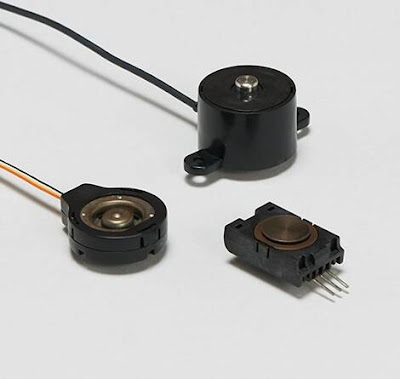
FUTEK Advanced Sensor Technology (FUTEK) manufactures Force Sensors in the United States. FUTEK is a major maker of Force Transducers, utilising one of the most advanced technologies in the Sensor Industry: metal foil strain gauge technology. A transducer that converts an input mechanical load, weight, tension, compression, or pressure into an electrical output signal is referred to as a force sensor (load cell definition). Force Sensors are often referred to as Force Transducers. Load cells are classified into numerous varieties based on their size, geometry, and capacity.

What is a Force Sensor?

A force sensor is, by definition, a sort of transducer, specifically a force transducer. It transforms an input mechanical force such as load, weight, tension, compression, or pressure into another physical variable, in this example, an electrical output signal that can be measured, converted, and standardised. The electrical signal changes proportionally to the force applied to the force sensor.

Force transducers have become an essential component in a wide range of industries, including automotive (car sensors or vehicle sensors), high precision manufacturing, aerospace and defence, industrial automation, medical and pharmaceuticals, and robotics, where accurate and repeatable measurement is critical. Many unique force measuring applications have lately emerged as a result of improvements in Collaborative Robots (Cobots) and Surgical Robotics.

How does a Force Sensor work?

To begin, we must comprehend the fundamental physics and material science underlying the strain gauge's working concept of force measurement (sometimes referred to as Strain gage). A metal foil strain gauge is a sensor whose electrical resistance changes as force is applied. In other words, it transfers (or transduces) force, pressure, tension, compression, torque, weight, and so on into an electrical resistance change that can subsequently be measured.

Strain gauges are electrical conductors tightly attached to a film in a zigzag shape. When this film is pulled, it — and the conductors — stretches and elongates. When it is pushed, it is contracted and gets shorter. This change in shape causes the resistance in the electrical conductors to also change. The strain applied in the load cell can be determined based on this principle, as strain gauge resistance increases with applied strain and diminishes with contraction.

Edge emitting laser is witnessing wide adoption typically in laser printing and optical communication

Edge emitting laser Market

The term "edge emitting laser" refers to how the light is emitted rather than the point of contact between the probe's tip and the surface being printed. An 'emission' is a generic name for any laser printer. A laser printer can also produce sound or video. These are referred to as "light emission" laser printers. Text printing, pictures and graphics, logos, signage, branding, flat decals, and many other applications are all possible with an edge-emitting laser printer. An edge emits laser light that can be changed based on the situation.

Many medical applications make use of emitters. An emitter is used to emit light in dental applications. This is used to clean teeth and identify fillings. The light emitted by an Emitter can also be used to heat up instruments, making them faster and more precise, reducing errors. An emitter can also be employed in industrial applications. It is often used in laboratories for things like lighting up research without causing damage to the lab space. The heat produced is used to speed up a process.

A form of computer printer is an edge emitting laser printer. It operates by directing laser light between an inkjet head and a sheet of paper. At the opposite end of the cable is an LED (light-emitting diode). When this light strikes the paper, it absorbs and emits light. One of the biggest disadvantages of an edge emitting laser printer is its poor performance on textiles. In general, the laser light emitted is not extremely bright. Furthermore, the produced light has a tendency to wash off colours that lie beneath the paper's surface. Recently, in February 2021, Osram Licht AG, a German photonics company, introduced a new edge-emitting laser chip design, which matches the wavelength stability of vertical-cavity surface-emitting laser (VCSELs).

Blood Irradiation continues to witness major demand with key applications in research and development purposes and transfusion of medicine

Blood Irradiation market


A Blood Irradiator is a medical device used to treat Hemorrhoids and Ulcerative Colitis. It is used to treat internal and abdominal blood vessel haemorrhage, as well as non-traumatic haemorrhoids. Ultrasonic-based technologies, which use superhigh frequency sound waves to transport energy directly into the tissue, are used in Blood Irradiator devices. Ultrasound technology is now one of the most efficient and rapid techniques of delivering high-intensity focused ultrasound radiation directly to damaged tissues.

According to medical experts, using traditional x-ray equipment to blood irradiator carried a very high danger of transmitting Transfusion Associated Gland-Versus-Host Disease (T GA-VHD). Traditional X-Ray Therapy involves exposing the patient's tissue to x-ray radiation, which causes the release of free radicals, which attack healthy tissue, resulting in cellular damage and disease progression. People who have had radiation therapy for ulcerative colitis or haemorrhoids are more likely to develop Transfusion Associated Gland-versus-host disease. Thus, researchers have now developed an ultrafast x-ray technology called Ultrafast Light Radiation Ablation (UVL-A) that eliminates this risk by transmitting light energy directly to the target tissues.

Traditional x-ray therapy has limitations, including the inability to identify tiny tumours or other abnormal growths beneath the skin's surface. Newer ultrafast technologies enable blood irradiation with high-frequency sounds and light without sacrificing image quality. These contemporary technologies are capable of delivering high-energy doses of radiation to precise target locations while causing no harm to normal tissue structures. As a result, they are ideal for treating a variety of non-traumatic hemorrhoid disorders such as varicose veins, damaged blood vessels, spider veins, and haemorrhoids.

Blood irradiation is used in a wide range of medical practices for a wide range of medical situations. One application is called venapro and is used to treat hemorrhoids. Another application is called distal TA-GVHD and is used to treat spider veins and varicose veins. In addition to these applications, blood irradiation is also used in the treatment of cancers such as breast cancer, melanoma, and lung cancer. The technology is currently undergoing clinical trials to test its effects in treating various types of cancer. Blood irradiation is also being evaluated for use in post-traumatic stress disorder (PTSD), head injuries, head trauma, migraines, and many other psychological disorders.

4G (LTE) Devices Enable User to Acquire Wireless Service Plans that have Faster Internet Speeds The introduction of GSM tech


4G (LTE) Devices

The introduction of GSM technology resulted in significant breakthroughs in the capabilities of cell phones. Originally, this form of cell phone service was designed to communicate through a regular telephone line, which meant that the rates at which individuals could use the devices were limited. GSM was created to overcome these restrictions by boosting signal performance. In short, it can do faster data transfers without the usage of additional equipment. Because mobile phone contracts are no longer required, it is now possible to receive faster Internet connections for the same price.

One of the things that have made 4G (LTE) Devices so popular is that it allows users to acquire wireless service plans that feature much faster Internet speeds.To understand how this type of system works, it is helpful to first understand how other wireless networks work. The wireless network operates similarly to radio waves, with signals picked up by various antennas and transmitters. These signals are subsequently transformed into radio waves, which can pass through walls and other obstacles. When signals can go this far, they are known as LPD, or long-distance voice and data transfer.

The GSM operation differs in that it transmits signals using a digital standard rather than analogue technology. As a result, it can send much faster signals, making it perfect for offering wireless network services in an interior environment. One method by which this type of technology accomplishes this is through cell repeater licencing. This enables apartment and house owners to install their own private cell repeater, which may subsequently support a variety of local wireless networks. Furthermore, each apartment complex or house can have its own unique number of radios that can be utilised for both personal and professional purposes.

Tuesday, 23 November 2021

Vodka is consistently one of the top selling spirits in the US and these are the bottles that deserve a place of honor on your bar cart.


Vodka Market


Vodka is composed mainly of water and ethanol but sometimes with traces of impurities and flavourings. Traditionally, it is made by distilling liquid from fermented cereal grains. Potatoes have been used in more recent times, and some modern brands use fruits, honey, or maple sap as the base.
Since the 1890s, standard vodkas have been 40% alcohol by volume (ABV) (80 U.S. proof).The European Union has established a minimum alcohol content of 37.5% for vodka.Vodka in the United States must have a minimum alcohol content of 40%
Vodka is traditionally drunk "neat" (not mixed with water, ice, or other mixers), and it is often served freezer chilled in the vodka belt of Belarus, Estonia, Finland, Iceland, Latvia, Lithuania, Norway, Poland, Russia, Sweden, and Ukraine. It is also used in cocktails and mixed drinks, such as the vodka martini, Cosmopolitan, vodka tonic, screwdriver, greyhound, Black or White Russian, Moscow mule, Bloody Mary, and Caesar.

The word vodka was recorded for the first time in 1405 in Akta Grodzkie,[10] the court documents from the Palatinate of Sandomierz in Poland.[10] At the time, wódka referred to medicines and cosmetic products, while the beverage was called gorzałka (from the Old Polish gorzeć meaning "to burn"), which is also the source of Ukrainian horilka (горілка) or Belarusian harelka (гарэлка). The word vodka written in Cyrillic appeared first in 1533, in relation to a medicinal drink brought from Poland to Russia by the merchants of Kievan Rus'.

Although the word vodka could be found in early manuscripts and lubok pictograms, it began to appear in Russian dictionaries only in the mid-19th century. It was attested in Sámuel Gyarmathi's Russian-German-Hungarian glossary of 1799, where it is glossed with Latin vinum adustum ("burnt [i.e. distilled] wine").

Thermal spray coatings are used to improve friction and wear and, as a result, the life span of machine parts is enhanced.


Thermal spraying Coating market


Thermal spraying techniques are coating methods that include spraying melted (or heated) materials onto a surface. Electrical (plasma or arc) or chemical techniques are used to heat the "feedstock" (coating precursor) (combustion flame).

When compared to other coating methods such as electroplating, physical and chemical vapour deposition, thermal spraying may create thick coatings (approximate thickness range is 20 microns to several millimetres, depending on the procedure and feedstock) over a large area at a high deposition rate. Metals, alloys, ceramics, polymers, and composites are among the coating materials accessible for thermal spraying. They are fed as powder or wire, heated to a molten or semimolten state, and accelerated as micrometer-sized particles towards substrates. The source of energy for thermal spraying is typically combustion or electrical arc discharge. Resulting coatings are made by the accumulation of numerous sprayed particles. The surface may not heat up significantly, allowing the coating of flammable substances.

The mechanical bond between a thermal spraying coating and the substrate is stronger than metallurgical or fused bonds. Adhesion to the substrate is determined by the quality of the substrate surface, which must be cleaned and roughened prior to spraying with grit blasting or machining

Thermal spraying methods have been widely employed for component preservation and reclamation for many years across all main engineering industry areas. Recent equipment and process innovations have enhanced the quality of thermally sprayed coatings and broadened their possible application range.

What are the Benefits of Thermal Spraying?


  • Comprehensive choice of coating materials: metals, alloys, ceramics, cermets, carbides, polymers and plastics
  • Thick coatings can be applied at high deposition rates
  • Thermal spray coatings are mechanically bonded to the substrate - can often spray coating materials which are metallurgically incompatible with the substrate
  • Can spray coating materials with a higher melting point than the substrate
  • Most parts can be sprayed with little or no preheat or postheat treatment, and component distortion is minimal
Thermal spray coatings are extensively used in the manufacturing of gas turbines, diesel engines, bearings, journals, pumps, compressors and oil field equipment, as well as coating medical implants.

Thermal spraying is principally an alternative to arc welded coatings, although it is also used as an alternative to other surfacing processes, such as electroplating, physical and chemical vapour deposition and ion implantation for engineering applications.


Wireless electric vehicle (EV) charging Market to Soar in the Near Future Owing to Growing Consumer Adoption

Wireless electric vehicle (EV) charging makes use of near field charging technology, which charges electric vehicles using resonant magnetic...